Summary
This blog post explores why AI Agents are rapidly becoming the new standard for business technology in 2026.
- AI Agents are moving beyond simple chatbots to become “digital coworkers” that can handle real work with very little help.
- The market is growing incredibly fast, expected to be worth over $50 billion by the year 2030.
- These agents don’t just answer questions; they can actually complete tasks like booking appointments, screening tenants, or filing insurance claims.
- They help businesses save money by cutting down on repetitive paperwork and working 24/7 without getting tired.
- While old software follows strict rules, AI agents use “reasoning” to figure out what to do when things get complicated.
- Security is a top priority, using human oversight to make sure the AI is always making the right decisions.
- Companies are seeing big wins, including much faster response times and the ability to talk to customers in many different languages.
Table of Content
- Why AI Agent Development Is Becoming Popular
- How AI Agents Transform Specific Industries
- Real Estate
- Insurance
- Retail & E-commerce
- Healthcare
- Finance & Banking
- Introduction
- What exactly is an AI Agent?
- Why the Shift is Happening
- Why the Sudden Surge?
- Why Traditional Software is No Longer Enough
- Implementation
- Trustworthiness
- Real Results
- Conclusion
Why AI Agent Development Is Becoming Popular
The rapid rise of AI Agent development isn’t just a trend; it’s a fundamental shift in how we interact with technology. By 2026, many companies have begun moving beyond simple chatbots to more autonomous ‘digital coworkers’ that can perform tasks with limited supervision.
How AI Agents Transform Specific Industries
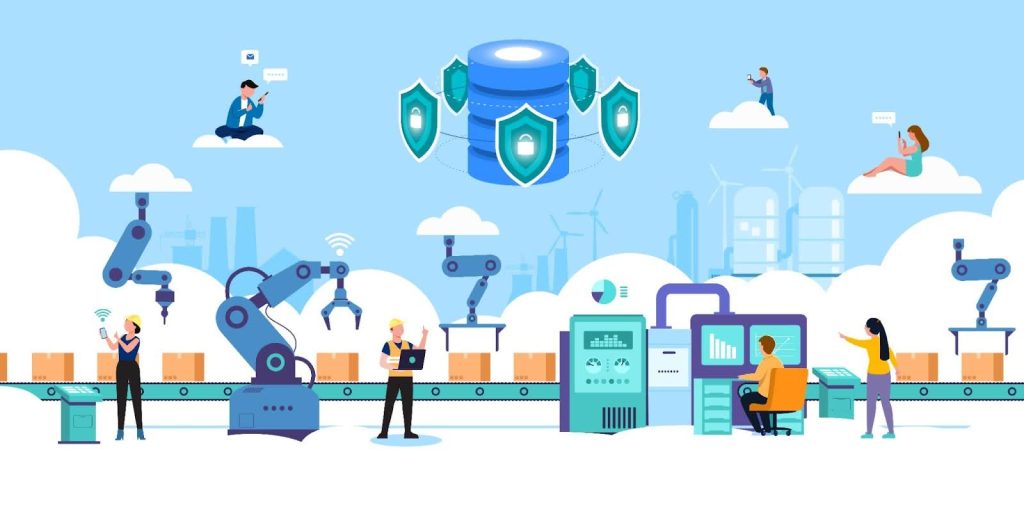
The transition from simple chatbots to autonomous “digital coworkers” is most visible in how specific sectors are being rewritten by Agentic AI. According to the 2025 IBM/Morning Consult study, over 99% of developers are now actively building or experimenting with AI Agents, signaling that “agent-first” architecture is the new industry standard.
Unlike traditional software that just stores data, these agents act as independent executors. They don’t just “talk”, they reason, plan, and execute tasks to keep businesses running 24/7.
Real Estate
In real estate, AI Agents have moved from just answering “Is this available?” to managing the entire rental and sales funnel.
- Instant Tenant Screening: Agents can now verify credit scores and background checks autonomously, reducing the process from days to just a few hours.
- 24/7 Virtual Tours: Using smart locks and AI, agents can schedule tours, answer questions about neighborhood schools, and even handle initial lease applications while the human agent sleeps.
- Predictive Pricing: They analyze thousands of local market data points to suggest the best listing price with 20% higher accuracy than traditional tools.
Insurance
The insurance industry is using AI Agents to turn a 30-day headache into a 48-hour win for customers.
- Rapid Claims: Routine claims (like a cracked windshield or minor fender bender) are now being processed in under 24 hours, a 75% reduction in wait time.
- Fraud Detection: Agents monitor millions of data points in real-time, catching suspicious patterns that save the industry an estimated $10 billion per year.
- Personalized Coverage: Instead of a “one-size-fits-all” plan, agents analyze your specific risk profile to suggest custom policies instantly.
Retail & E-commerce
Retailers are using agents to bridge the gap between “browsing” and “buying.”
- Personal Shopping Assistants: Top brands like Amazon and Walmart use agents that don’t just recommend products; they manage shopping lists and autonomously reorder essentials before you run out.
- Abandoned Cart Recovery: AI Agents can detect when a customer is stuck on a checkout page and proactively offer a shipping discount, cutting cart abandonment by 25%.
- Inventory Intelligence: Agents can predict stock needs by watching weather patterns or social trends, reducing overstock by 15%.
Healthcare
In 2026, AI Agents are the “assistants” doctors have always needed.
- Administrative Relief: Agents handle patient intake and insurance coding, freeing up doctors from 30-40% of their day, usually spent on paperwork.
- Early Detection: AI tools are now outperforming standard tests in detecting certain cancers up to two years earlier with over 80% accuracy.
- Smarter Diagnostics: By instantly scanning millions of medical journals, agents help clinicians reduce diagnostic errors by 20–30%.
Finance & Banking
Banks are moving past basic “Check Balance” bots to agents that manage your financial health.
- Loan Approvals in Minutes: By verifying income and spending habits instantly, AI Agents can reduce loan processing times from days to minutes.
- 24/7 Wealth Management: Sophisticated agents now offer personalized investment advice to everyday customers, a service previously reserved only for the wealthy.
- AML/KYC Automation: Automated “know your customer” agents handle identity verification and fraud monitoring, cutting investigation times by 50%.
Introduction
The way we use AI is changing at breakneck speed. As we move through 2026, the era of the simple chatbot is officially behind us. We’ve graduated from bots that just “chat” to autonomous digital coworkers that actually “do.”
This isn’t just tech hype; the numbers back it up. A major study by IBM and Morning Consult found that an incredible 99% of developers are now exploring or building AI Agents. We are witnessing a massive shift in how businesses operate. Most of us are no longer satisfied with a bot that just points us to an FAQ page; we want a system that can take the wheel and get the job done.
What exactly is an AI Agent?
To understand the difference, think of a traditional chatbot like a digital librarian. It’s great at finding information and answering questions, but it can’t leave the library to run an errand for you.
An AI Agent, by contrast, is like a highly skilled personal assistant. It is software that doesn’t just talk—it reasons through a problem, plans the necessary steps, and executes those actions independently.
Why the Shift is Happening
- From Reactive to Proactive: A “bot” sits around waiting for you to ask a question. An “agent” is proactive; it can monitor your inbox, spot a scheduling conflict, and offer to fix it before you even notice there’s a problem.
- Solving Multi-Step Problems: If you ask a bot to “help organize a business trip,” it might give you a link to a travel site. An agent actually does the work: it researches flights, books the hotel that fits your preferences, and syncs everything to your calendar.
- The “Digital Coworker” Mindset: We are beginning to treat AI as a true team member. Businesses are now “hiring” agents to manage entire workflows, like qualifying sales leads or handling complex customer support tickets from start to finish.
Why the Sudden Surge?
If it feels like AI Agents appeared overnight, you’re not imagining it. While we’ve had “AI” for years, the specific technology required to make agents work with the ability to plan and act only recently hit a tipping point.
Here are the three main drivers behind the current surge:
1. Explosive Market Growth
The financial world is betting big on agents. According to Grand View Research, the global AI Agent market was valued at roughly $5.4 billion in 2024. However, it is projected to skyrocket to over $50 billion by 2030. This represents a staggering 45.8% annual growth rate. Businesses are realizing that being “AI-ready” is no longer optional; it’s the new baseline for staying competitive.
2. Technological Maturity
The reason agents are possible today is thanks to the latest generation of Large Language Models (LLMs) like GPT-5 and Gemini 2.5.
- Better Reasoning: Newer models have a “Deep Think” mode that allows them to test different hypotheses before acting.
- Massive Memory: With “context windows” now reaching 1 to 2 million tokens, an agent can “read” your entire company handbook, past emails, and project files all at once to make an informed decision.
- Near-Human Accuracy: We’ve moved from models that guess the next word to models that can solve complex coding and math problems with 90%+ accuracy.
3. The Productivity Gap
Operational costs and labor shortages are hitting businesses hard. AI Agents provide a “pressure valve” by handling the repetitive, high-volume tasks that burn out human employees.
- Cutting Costs: Real-world deployments show that agents can reduce operational costs by 20 -40% by automating end-to-end workflows.
- Always-On Output: Unlike human teams, agents work 24/7 without fatigue. In industries like finance and telecom, companies are seeing a 4x return on investment (ROI) within the first year of deployment.
The Reality: In 2026, the question isn’t “Will AI change my business?” but “How quickly can I deploy an agent to handle the work my team is too busy to do?”
Why Traditional Software is No Longer Enough
For decades, we’ve relied on software built with a simple “if-then” logic. If a customer clicks this button, then show them this page. This works perfectly for predictable tasks, but it hits a wall the moment things get messy, ambiguous, or human. In 2026, the complexity of modern business has officially outpaced the capabilities of rigid, traditional code.
The Problem: The “Judgment Gap”
Most business isn’t a straight line; it’s full of “it depends” moments. According to 2026 industry trends, 60–70% of customer inquiries are repetitive, yet they require a level of judgment that old-school bots simply lack.
Traditional software treats every interaction as a transaction to be filed. If an input doesn’t match a pre-programmed rule, the system returns an error or a generic “I don’t understand” message. This creates a bottleneck where human employees have to step in for even the smallest exceptions, wasting time and driving up costs.
The Solution
AI agents bridge this gap by using Large Language Models (LLMs) as their “cognitive engine.” Instead of following a script, they use reasoning to understand the intent behind a request, much like a human does, but at a massive scale and lower cost.
- Reading Between the Lines: An agent can understand that when a customer says, “My order never arrived, and I’m hosting a party tonight,” they aren’t just looking for a tracking number—they are frustrated and need an urgent solution.
- Handling the Messy Stuff: Unlike traditional apps that need “clean” data, agents can process unstructured information—like voice notes, handwritten receipts, or long email threads—and turn them into actionable tasks.
- Problem-Solving vs. Error-Reporting: When traditional software hits a missing file, it throws an “Error 404.” An AI agent, however, will recognize the file is missing, search the backup server, or ask a teammate where it might be moved, continuing the job until it’s finished.
Traditional Software vs. AI Agents
1. Foundation
- Traditional Software: Works on fixed “If–Then” rules written by developers.
- AI Agents (LLM-Powered): Use a dynamic reasoning engine that can analyze situations and decide what to do.
2. Adaptability
- Traditional Software: Usually fails or behaves incorrectly when it receives unexpected input.
- AI Agents: Can handle uncertain or complex situations where the answer depends on context.
3. Type of Data Used
- Traditional Software: Mostly works with structured data such as forms, buttons, and predefined fields.
- AI Agents: Can understand unstructured data like text, voice, images, and conversations.
4. Final Goal
- Traditional Software: Designed to follow instructions exactly as programmed.
- AI Agents: Designed to achieve a goal, even if the path to the goal changes.
Implementation
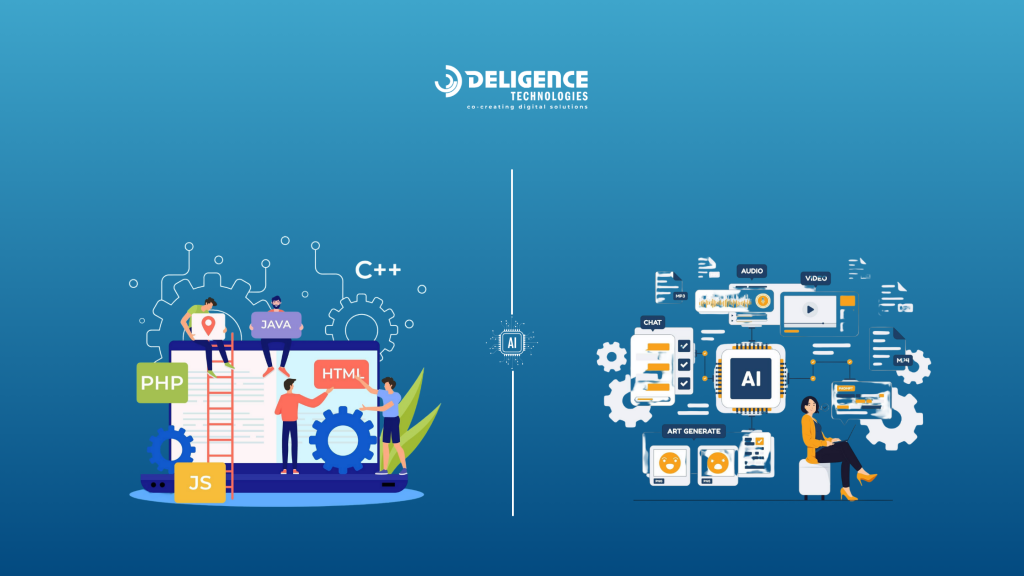
Moving your business toward AI agents doesn’t mean you have to rebuild everything overnight. In fact, the most successful companies are taking a “pilot-first” approach. Instead of trying to automate every department at once, they start with a small, focused win.
The Incremental Start
Think of a pilot as a 90-day experiment. You pick one specific, high-impact problem—like a Lead Qualification Agent or an Invoice Reconciliation Agent—and let it prove its value in a controlled environment.
- Phase 1: Foundation Building: Clean up your data and set clear security rules.
- Phase 2: The Pilot: Deploy one agent to handle a single repetitive task.
- Phase 3: Scaling: Once the pilot shows a clear ROI (like reducing response times by 50%), you begin “hiring” more agents for other departments.
Why You Need a Partner, Not a Product
In 2026, the market is flooded with “one-size-fits-all” AI tools. But as we discussed, traditional software breaks when it hits your unique business rules. This is why businesses are increasingly turning to AI agent development services rather than relying on generic AI tools. A specialized development partner can build agents tailored to your workflows, integrations, and data security requirements.
- Custom Workflows: Your business has its own “secret sauce”specific ways you talk to customers or handle files. A generic bot won’t know this. A development partner like Deligence builds agents that are “trained” on your specific workflows, not just general data.
- Deep Integration: Successful agents need to “talk” to your existing CRM, your Slack channels, and your databases. A partner ensures these connections are seamless and secure.
- Ongoing Growth: Unlike a box of software that sits on a shelf, an AI agent is a living system. It needs a partner who can monitor its performance, update its reasoning, and help it grow as your business grows.
Trustworthiness

As businesses move toward autonomous systems, the biggest concern is always: “Is my data safe?” In 2026, security is no longer just a feature—it is the foundation of every AI Agent we build. Unlike public AI tools, where your information might be used to train future models, custom agents are built with “Privacy by Design.”
Data Privacy
When you use public AI platforms, there is a risk of “data leakage.” If an employee pastes a confidential contract into a public bot, that data could technically be stored outside your control.
At Deligence, we solve this by building custom agents that operate within your own secure environment.
- Private LLMs: We use private endpoints (like Azure OpenAI or AWS Bedrock), which guarantee that your data is never used to train public models. Your proprietary information stays yours.
- Retrieval-Augmented Generation (RAG): Instead of feeding all your data into the AI’s “brain,” we use a secure library system. The agent only “looks up” the specific document it needs to answer a query and forgets it immediately after the task is done.
- Role-Based Access (RBAC): Just like a human employee, an AI Agent is only given the permissions it needs. A support agent won’t have access to HR payroll files, and a sales agent won’t see sensitive legal documents.
The “Human-in-the-Loop” (HITL) Model
One of the biggest myths about AI Agents is that they replace humans entirely. In reality, the most reliable systems, especially in modern AI agent development Services, use a Human-in-the-Loop approach. This ensures that while the agent handles the heavy lifting, a human is always there to oversee the high-stakes decisions.
- The Failsafe Mechanism: If an agent encounters a complex problem it hasn’t seen before, it doesn’t “hallucinate” or guess. Instead, it flags the issue for a human team member.
- Accountability: For tasks like approving a $10,000 refund or signing a legal contract, the agent can prepare all the paperwork, but a human provides the final “stamp of approval.”
- Personal Touch: AI Agents handle the 80% of repetitive work so that when a customer truly needs empathy or a creative solution, your human team has the time to provide it.
Reliability Fact: In 2026, companies using “Human-in-the-Loop” systems report a 95% higher trust rating from their customers compared to those using fully unmonitored bots.
Real Results
While the technology behind AI Agents is impressive, the real reason they are becoming a business staple in 2026 is the measurable ROI. As AI agent development and deployment move from a “pilot” phase to full production, companies generally see a dramatic shift in three key areas.
Faster Response Times
In today’s “instant-gratification” economy, a slow response is a lost sale. Research from Zendesk and Gorgias shows that AI Agents can reduce First Response Time (FRT) by up to 37–60%.
- Instant Engagement: Unlike a human who might be on another call, an agent can handle thousands of queries simultaneously.
- Resolution Speed: Companies like Lyft and ServiceNow have reported up to an 87% reduction in total resolution time by letting agents handle routine troubleshooting and documentation.
Better Leads
For sales teams, time is money. AI Agents act as a “bouncer” for your sales funnel, ensuring your humans only spend time on high-value prospects.
- Autonomous Qualification: According to G2 Data, nearly 49% of high-autonomy behaviors in companies today are focused on “Sales Outreach Pre-qualification.
- Intent Detection: Agents analyze website behavior and ask smart questions to filter out “window shoppers.” This leads to a reported 47% improvement in conversion rates and allows sales reps to focus on the 40% of deals that are actually ready to close.
- Contextual Handoff: When an agent passes a lead to a human, they don’t just send a name; they send a full summary: “This lead has visited the pricing page three times and is concerned about integration with Salesforce.”
24/7 Availability
Global business doesn’t stop at 5:00 PM. AI Agents ensure you never miss an opportunity because of a time zone difference or a holiday.
- The “Follow the Sun” Model: By operating 24/7, businesses have seen a 36% increase in repeat purchases simply because help was available the moment it was needed.
- No Missed Calls: For small and mid-sized businesses (SMBs), agents ensure that every midnight inquiry or weekend lead is captured and nurtured instantly, rather than sitting in an inbox until Monday morning.
- Multilingual Reach: Modern agents can speak over 50+ languages fluently, allowing a local business to scale globally without hiring a single international staff member.
The ROI Fact: According to a 2026 report by Master of Code, 62% of companies anticipate a full 100% or greater return on investment from their AI agent deployments within the first year.
Conclusion
AI Agents are no longer a futuristic dream; they are a current competitive necessity. As we’ve seen, the shift from “Bots” to “Agents” is allowing businesses to bridge the productivity gap, cut costs by 20–40%, and provide a level of service that was previously impossible. Businesses that partner with a reliable AI agent development company can deploy intelligent digital coworkers faster while ensuring security, scalability, and long-term performance.
The question for 2026 isn’t whether you should use AI, but how quickly you can put an agent to work for your team.
Ready to Work Smarter?
Don’t let your business get left behind by rigid, old-school software. Whether you need to automate your sales funnel, speed up your claims processing, or provide 24/7 support, a custom solution is the key.
Book a Free Consultation with Deligence today to start building your custom “digital coworker” and reclaim your team’s time.